




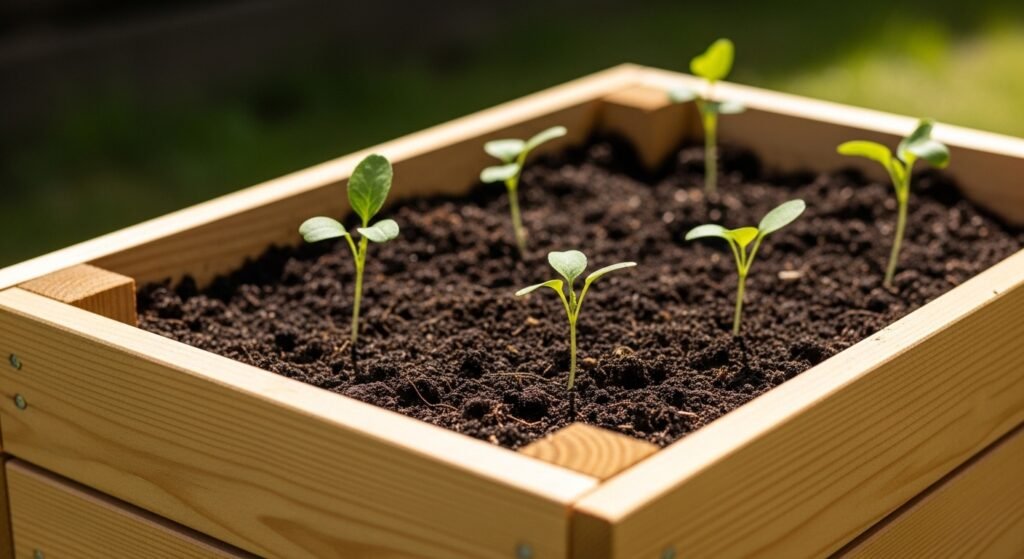
Hey girl, remember when I tried growing tomatoes in pots last summer and they all flopped? Total disaster. That’s why I’m obsessed with DIY raised garden beds for beginners – they’re a game-changer for us newbies who just want fresh herbs without the hassle.
I put this roundup together because I finally built my first one last weekend, and oh my gosh, it’s so rewarding. No more bending over awkwardly in the dirt – these keep everything at waist height. My back thanks me already.
Stick with me through these 12 top picks, and you’ll have all the inspo plus simple tips to make your own. You’ll be harvesting your own salads in no time, promise.
12 DIY Raised Garden Beds for Beginners You’ll Wish You Tried Sooner
Simple Tarp-Lined Wood Bed
This one’s super basic – just wood frames lined with black tarp over grass. I love how it keeps weeds out without fancy materials. Perfect if you’re starting small in your backyard.
Cinder Block Starter Garden
Cinder blocks stacked into a quick bed – fill ’em with soil and go. No tools needed beyond stacking, which is why I did this for my mom’s patio last year. She still raves about her herbs, and it cost like $50 total. You’ll feel like a pro instantly.
Gravel Base Wooden Box
A wooden box on gravel next to existing beds – drainage on point. I added one like this by my fence, and it solved my soggy soil issues forever.
Lush Multi-Plant Border Bed
Check out these sides bursting with plants – middle one’s thriving too. It’s inspiring for mixing veggies and flowers. Imagine this in your yard, girl.
Curb Appeal Front Yard Beds
White house vibes with raised beds flanking the path – instant charm. I copied a mini version for my entryway, and neighbors keep asking for the how-to. So easy to scale down.
Grate-Topped Build in Progress
Wood and metal grate combo under construction – sturdy for heavy soil. Reminds me of my failed attempt without reinforcement; lesson learned. You can do this over a weekend.
Backyard Wooden Box Classic
Tall wooden box surrounded by scrap boards – ready for dirt. I built something similar with pallet wood I had lying around. Saved cash and looks rustic cute.
Pro tip: line the bottom with cardboard first.
Stepped Garden Bed Design
Wooden steps turning into garden space – genius for slopes. If your yard’s uneven like mine, this levels everything out beautifully.
Fence-Side Planter Tending
Raised box against the fence, perfect for easy reaching. Those two gardeners make it look fun – that’s me and my sister now, every Sunday. Veggies taste better when you grow ’em together.
Multiple Bed Veggie Patch
Several beds packed with greens – scalable dream setup. Start with one, add more as you get hooked, like I did.
Rustic Barnside Planters
Three wooden ones overflowing with veggies by a barn – farm girl goals. I don’t have a barn, but my garage version works the same. Truck in the back? Total vibe.
Fresh picks right outside the door – yes please.
Wall-Mounted Strawberry Side
Strawberries climbing a building side in raised pockets. Space-saving magic if you’re tight on yard. Mine are going nuts this season – sweetest berries ever.
How to Actually Make This Work For You
Okay, real talk – start by picking a sunny spot in your yard, at least 6 hours of light, and measure twice before cutting any wood because I messed that up once and had to redo boards. Use untreated cedar or pine for beds since it lasts longer without chemicals leaching into your food, and always add a bottom liner like landscape fabric or cardboard to block weeds without killing the soil vibe. Oh, and fill with a mix of topsoil, compost, and a bit of sand for drainage – I grabbed mine from the garden store for cheap, and it made my plants explode. Scale it to your space; even a 4×4 foot bed feeds a family if you plant smart like tomatoes, lettuce, and herbs close together. Test the soil pH too – aim for 6-7 – with a $10 kit, trust me it saves headaches later.
What’s the cheapest material for a beginner raised bed?
Cinder blocks or untreated pine boards – under $100 for a 4×4. I used blocks first and they’re still going strong after two years. Super forgiving if you stack wonky.
Do I need tools to build one?
Nope, not fancy ones – hammer, screws, and a saw if you’re woodworking. Borrow from a neighbor like I did. Keeps it beginner-friendly.
How do I fill it without breaking the bank?
Mix store-bought topsoil with homemade compost or free leaves. My secret? Hugelkultur – bury branches at the bottom for free drainage and nutrients. Works like magic.
Can I do this in a small yard or apartment?
Absolutely – go vertical with wall-mounted or corner boxes. I squeezed three into my tiny patio, and now I’ve got salads weekly. No yard required.